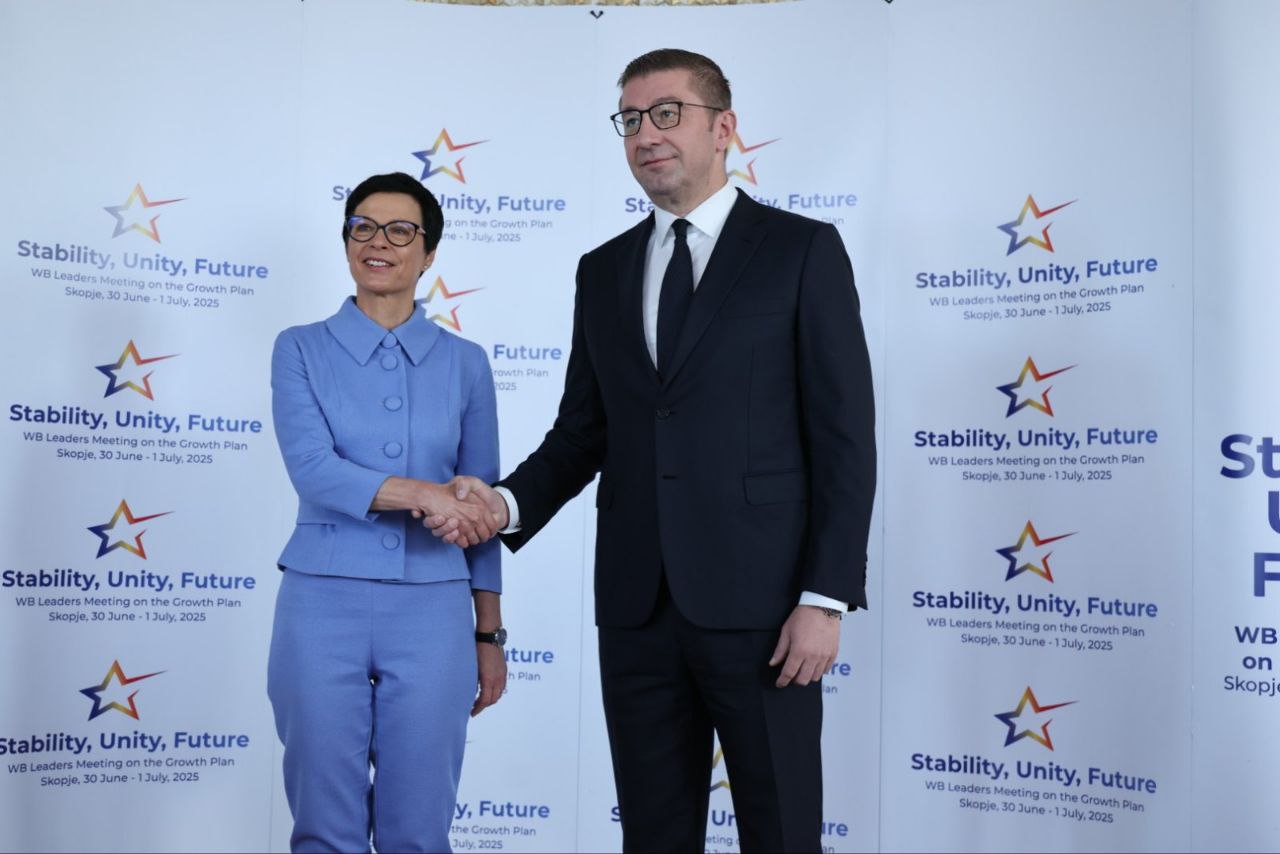
"Merit" Versus "Constitution": Mickoski and Kos Tell the Same Story Differently
Mickoski: the merit-based path doesn't apply to us. Kos: the constitutional change is an already-agreed condition.
In the same week, two different capitals sent two conflicting messages about why Macedonia's EU path is not moving. In an interview with the Atlantic Council from Washington, Prime Minister Hristijan Mickoski said EU accession should be merit-based, but in Macedonia's case it is not.
"Sadly, we deliver on everything when it comes to the merit-based approach, but then we always face artificially imposed obstacles. First it was changing our constitutional name... Now we again have an additional condition, again changing our Constitution. And what frightens me more is that this process practically never ends," Mickoski said, adding there is no plan to withdraw from talks with Bulgaria.

The same week, EU Enlargement Commissioner Marta Kos, in an interview with Bulgarian national broadcaster BNT, repeated exactly what Mickoski calls an artificial obstacle: that Macedonia must write Bulgarians into its Constitution for the accession process to continue.
"The government in North Macedonia must keep its promise. They must change their constitution, this was agreed between North Macedonia and the 27 EU member states. Once this is done, I will count on your country's support too," Kos said, addressing the Bulgarian audience directly.
The two statements do not literally contradict each other — Kos speaks of a formal condition agreed with member states, Mickoski of a feeling that conditions never stop coming. But that is exactly where the dispute sits: one side sees the constitutional demand as an already-settled commitment, the other as one more link in a chain with no end.
MKNews Hub · Politics · September 18, 2026
